VR for Students in Pakistan: How Virtual Reality Helps Learning
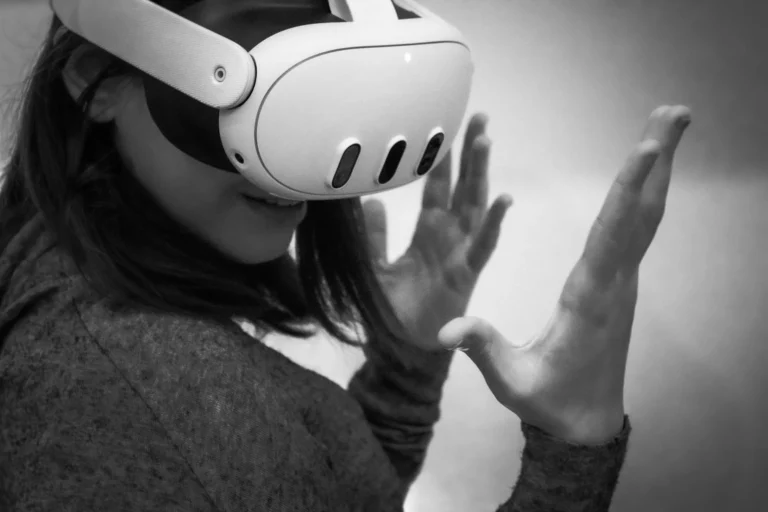
VR helps students in Pakistan learn through immersive virtual field trips, 3D science simulations, language learning environments, and historical reconstructions. The most accessible starting point is a PKR 500–1,500 Google Cardboard viewer from Daraz paired with free educational VR apps. For schools, inexpensive phone VR kits allow class-wide implementation without importing expensive standalone headsets.
VR is changing how students learn around the world and Pakistani students can access many of these tools today without expensive equipment. From virtual field trips to ancient Rome to 3D human anatomy models, educational VR apps have grown significantly in quality and accessibility. This guide focuses on what is practical for Pakistani students given local internet speeds, budget constraints, and hardware availability. For a broader look at VR education, also read our guide on virtual reality for education in Pakistan.
Why VR Improves Learning Outcomes
Research consistently shows that immersive experiences improve memory retention compared to reading text or watching video. The reason is simple: when you physically stand inside a 3D environment and interact with it, your brain encodes the experience more deeply. A medical student who virtually walks through the human heart remembers its structure better than one who reads about it in a textbook. For Pakistani students who lack access to expensive labs, museums, or field trips abroad, VR provides experiences that would otherwise be completely unavailable.
Study Note: A 2022 PwC study found VR learners were 4 times faster to train than classroom learners, 275% more confident to apply skills, and 3.75 times more emotionally connected to content. These gains are most significant for hands-on subjects like science, medicine, and engineering — all critical for Pakistani students.
Best Free Educational VR Apps for Pakistani Students
Google Expeditions (via Google Arts and Culture)
Google Expeditions offers hundreds of virtual field trips covering science, history, geography, and art. Pakistani students can visit the International Space Station, explore coral reefs, walk through the Great Wall of China, or tour world-class museums — all from their phone. The app works with any Google Cardboard-compatible viewer, costing PKR 500–1,500 on Daraz. Content is downloadable for offline use, which is critical for students with unreliable internet. The library includes content in science, biology, physics, and social studies aligned with common school curricula.
Pros
- Completely free — no subscription
- Works with cheap phone VR viewers from Daraz
- Downloadable for offline use
- Hundreds of educational field trips
Cons
- Requires a smartphone
- Older Cardboard apps require Android 7.0 or above
Complete Anatomy (3D4Medical) — Free Basic Version
Complete Anatomy is the most detailed interactive human anatomy tool available in VR. The free version allows you to explore the human muscular and skeletal systems in 3D. Medical and nursing students at Pakistani universities benefit enormously from being able to rotate, dissect, and label anatomical structures in three dimensions. The paid version covers all body systems in extreme detail, but the free tier is substantial enough for introductory anatomy study. Works on Meta Quest standalone or as a desktop VR application.
Pros
- Medically accurate 3D anatomy models
- Interactive labeling and dissection tools
- Supplements textbook learning effectively
- Free basic access available
Cons
- Full version requires subscription
- Best on standalone Quest — phone version less immersive
Affordable VR Options for Pakistan Students
The most accessible entry point for Pakistani students is a Google Cardboard-compatible viewer (PKR 500–1,500 on Daraz) paired with a mid-range smartphone. This setup runs hundreds of free educational VR apps and costs less than a single school textbook. For university students with more budget, the cheap VR headsets Pakistan guide covers options under PKR 30,000 including phone VR devices with better optics. A full standalone headset like Meta Quest 3 is not necessary for educational use — the phone VR approach delivers 80% of the educational benefit at 5% of the cost.
Which Subjects Benefit Most from VR in Pakistan
Not every subject gains equally from VR. The biggest benefits are in subjects that require spatial understanding or physical presence. Biology and medical sciences gain from 3D anatomy. Physics gains from virtual lab simulations. History gains from reconstructed historical environments. Engineering students benefit from 3D CAD visualization. Language learning benefits from immersive conversation environments. Mathematics and literature gain less from VR currently. Pakistani students in STEM fields, pre-med programs, and architecture have the most to gain from even basic VR tools.
VR for Schools and Colleges in Pakistan
For schools wanting to implement VR at the class level, the most cost-effective approach is a class set of Google Cardboard viewers (PKR 500–800 each) paired with a shared set of school tablets or students’ own smartphones. A class of 30 students can be equipped for under PKR 30,000 — far less than a single laptop lab workstation. Several Pakistani private schools in Lahore and Karachi have begun using this approach for science lab simulations and virtual field trips. For schools with more budget, a small set of 5–6 Meta Quest headsets allows rotation-based deeper learning sessions for advanced classes.
VR Setup Cost Comparison for Students (PKR)
Our Recommendation
Pakistani students should start with a Cardboard viewer from Daraz (PKR 500–1,500) and explore Google Expeditions and YouTube VR for educational content. This costs almost nothing and immediately expands access to experiences unavailable locally. University students in STEM fields should look at Complete Anatomy and similar subject-specific VR tools available on mobile. Schools should pilot with a class set of Cardboard viewers before investing in standalone headsets. VR is not a replacement for good teaching — it is an access tool that brings experiences to Pakistani students who would otherwise miss them.