VR vs AR: What’s the Difference and Which One Should You Buy in 2026?
VR (Virtual Reality) replaces your entire view with a digital world. AR (Augmented Reality) overlays digital elements onto the real world around you. For gaming and immersive entertainment, VR wins. For productivity and daily use, AR wins. For most buyers in 2026, especially in Pakistan, VR is the better value by far. The Meta Quest 3 at $499 is the best starting point for almost everyone. For more, see VR headset prices in Pakistan.
By PakVR Editorial Team | Last updated: April 2026
VR and AR are often mentioned together but they work very differently and serve very different purposes. This guide breaks down exactly what each technology does, which devices are worth buying in 2026, and which one makes sense for buyers in Pakistan.
If you have already decided on VR and want buying advice, see our guide to the best VR headsets under $500 in 2026.
What is VR and How Does It Work?
There are three types of VR headsets: phone VR (uses your smartphone, PKR 1,500-5,000), standalone VR (built-in processor, best balance — Meta Quest 3S at PKR 90,000+), and PC VR (requires gaming PC, highest quality but expensive). Standalone is recommended for most Pakistan buyers.
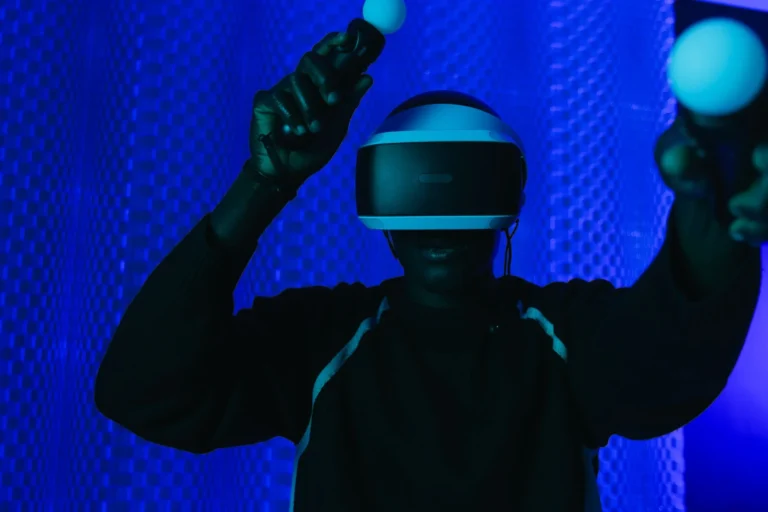
Virtual Reality places you inside a fully computer-generated environment. When you put on a VR headset, screens positioned a few centimetres from your eyes fill your entire field of view. Sensors track your head movements and update the image in real time, creating the sense that you are physically present inside a digital space.
Modern VR headsets use inside-out tracking, meaning cameras on the outside of the headset map your surroundings and track your position without external sensors. The Meta Quest 3 uses six cameras to track both the room and your hand controllers simultaneously.
Two small displays (one per eye) show slightly different images to create depth. Head tracking updates the view at 90 frames per second or faster. Your brain reads this as being inside a real space.
Best VR Headsets in 2026
Meta Quest 3: Best Standalone VR Headset
The Meta Quest 3 is the best all-round VR headset you can buy in 2026. It works completely without a PC or console, has pancake lenses for sharp visuals, supports full-colour mixed reality passthrough, and carries the largest VR game library on any platform. It also connects to a gaming PC via Air Link or USB-C for high-end PC VR games.
Pros
- No PC or console required
- Pancake lenses: sharp and clear image
- Massive game library on Meta Store
- Mixed reality colour passthrough included
- Regular free firmware updates
Cons
- 2 to 3 hour battery life
- Requires a Meta account
- No official retail in Pakistan
PlayStation VR2: Best VR for PS5 Owners
The PlayStation VR2 has the best display quality of any consumer VR headset under $600. Dual OLED panels with eye tracking and foveated rendering deliver sharper visuals than the Quest 3’s LCD. It also works with PC via the $59.99 PC adapter, and a 2026 firmware update added eye-tracking support on SteamVR. The catch: you need a PS5 to use it at all.
Pros
- Best OLED displays in this price range
- Eye tracking and foveated rendering
- Adaptive trigger feedback on controllers
- PC VR support via adapter
Cons
- Requires PS5 (adds $499 to total cost)
- Smaller game library than Meta Quest
- Wired connection only on PS5
What is AR and How Does It Work?
There are three types of VR headsets: phone VR (uses your smartphone, PKR 1,500-5,000), standalone VR (built-in processor, best balance — Meta Quest 3S at PKR 90,000+), and PC VR (requires gaming PC, highest quality but expensive). Standalone is recommended for most Pakistan buyers.
Augmented Reality keeps the real world visible and adds digital layers on top of it. Unlike VR, you can still see your actual surroundings. AR devices use transparent displays or cameras to blend digital content with physical reality. You can read a notification floating in your kitchen or see a 3D model sitting on your desk.
There are two main types of AR devices in 2026. The first is spatial computing headsets like the Apple Vision Pro, which use passthrough cameras and high-resolution displays to overlay full digital interfaces onto your view. The second is smart glasses like the Meta Ray-Ban glasses, which display simple information and handle calls and photos without a screen at all.
Cameras capture your real environment. A processor overlays digital images in real time. You see both the real world and digital content simultaneously, either through transparent lenses or screen passthrough.
Best AR Devices in 2026
Apple Vision Pro: Best Spatial Computing Headset
The Apple Vision Pro is the most advanced AR headset available for consumers. It uses high-resolution passthrough cameras and Apple’s custom R1 chip to render digital windows, apps, and 3D content floating in your real environment with less than 12 milliseconds of latency. You control everything using eye tracking, hand gestures, and voice, with no controllers needed.
The Vision Pro runs a full spatial version of visionOS with native support for thousands of iPad apps. It is a genuine productivity device: you can run multiple large virtual screens anywhere you have the headset. The major barrier is the price.
Pros
- Most advanced AR display available
- Full app ecosystem via visionOS
- Eye and hand tracking: no controllers
- Excellent for multi-screen productivity
- Best build quality of any headset
Cons
- $3,499 is prohibitively expensive
- 2 hour battery life on external battery
- Heavy for long sessions
- Not practical for Pakistan buyers
Meta Ray-Ban Smart Glasses: Best Everyday AR Device
The Meta Ray-Ban glasses are the most practical AR-adjacent device you can actually wear all day. They look like normal sunglasses but include a 12MP camera, open-ear speakers, microphones, and a small LED display in the right lens for basic notifications and navigation prompts. The 2024 update added Meta AI integration, so you can ask questions about what you are looking at in real time.
These are not full AR glasses. The display is minimal. But they represent what everyday AR actually looks like in 2026: subtle, wearable, and genuinely useful without being socially awkward.
Pros
- Looks like normal glasses: socially acceptable
- All-day battery life
- Built-in Meta AI assistant
- Good audio quality for calls and music
- Much cheaper than full AR headsets
Cons
- Very limited display: not true AR
- No app ecosystem
- Privacy concerns from built-in camera
VR vs AR: Side-by-Side Comparison?
When comparing VR headsets, look at three things: resolution (higher is clearer), tracking (inside-out is better for Pakistan because no base stations needed), and game library (Meta Quest has the largest with 500+ titles). Import cost adds 20-30% to any price in PKR.
| Factor | VR (Meta Quest 3) | AR Headset (Vision Pro) | AR Glasses (Ray-Ban) |
|---|---|---|---|
| Immersion | Full: blocks out real world | Partial: overlays on real world | Minimal: just a small lens display |
| Price (USD) | $499 Best Value | $3,499 | $299 |
| Price (PKR est.) | PKR 145,000-155,000 | PKR 975,000+ | PKR 83,000-90,000 |
| Gaming | Excellent: 500+ VR games | Limited game selection | Not for gaming |
| Productivity | Limited | Excellent: full app ecosystem | Basic notifications only |
| Portability | Moderate: needs a cleared space | Limited: tethered battery pack | High: wear anywhere |
| Pakistan Availability | Grey market: Daraz and Hafeez Centre | Not available locally | Very limited import only |
| Battery Life | 2 to 3 hours | 2 hours | 4 to 6 hours |
| Setup Required | Guardian boundary setup | Minimal | None |
The comparison below scores VR and AR across six practical categories for Pakistan users in 2026. Higher scores mean better performance in that category — for price, a higher score means more affordable options exist locally. This gives a side-by-side view of where each technology currently leads.
VR vs AR: Feature Comparison for Pakistan Users 2026
Scores out of 10 — higher price score means more affordable — PakVR Research April 2026
Immersion Level
Real World Awareness
Price in Pakistan
Gaming Use
Work and Productivity
Available in Pakistan
Virtual Reality (VR)
Augmented Reality (AR)
VR dominates for immersion and gaming while AR leads for real-world awareness and productivity — for Pakistani buyers VR is significantly more accessible in terms of both device availability and price.
Which is Better for Gaming?
This guide covers everything you need to know about the topic above, with specific focus on Pakistan pricing, availability, and practical advice for local buyers. Read the full section below for details and recommendations in PKR.
VR wins for gaming. It is not a close comparison.
The Meta Quest store has over 500 VR games including major titles like Asgard’s Wrath 2, Beat Saber, Superhot VR, and Thrill of the Fight 2. SteamVR adds hundreds more for PC VR players. The physical experience of swinging a sword, ducking behind cover, or shooting in VR has no equivalent on any AR device available in 2026.
The Apple Vision Pro has some games but the library is thin and the device is not designed around gaming. The Ray-Ban glasses do not support gaming at all.
If gaming is your primary use case, buy the Meta Quest 3. The library, performance, and physical interactivity of VR gaming are unmatched by any AR device at any price in 2026.
Which is Better for Work and Productivity?
This guide covers everything you need to know about the topic above, with specific focus on Pakistan pricing, availability, and practical advice for local buyers. Read the full section below for details and recommendations in PKR.
AR wins for productivity. Specifically, the Apple Vision Pro wins.
The Vision Pro runs a full spatial computing environment. You can have 10 large virtual screens floating around you anywhere: on a plane, in a hotel, at a coffee shop. Native support for Microsoft Office, Safari, and thousands of iPad apps makes it a real work tool. The eye and hand tracking interface is precise enough for actual document editing and multitasking.
VR headsets like the Quest 3 have some productivity apps but the passthrough quality and app ecosystem do not come close to the Vision Pro for serious work. The Ray-Ban glasses handle quick tasks well: checking notifications, making calls, and getting AI answers without taking your phone out.
If you work remotely and want a serious multi-screen setup without buying a large monitor, the Apple Vision Pro is the only device in 2026 that actually delivers on that promise. It costs $3,499. Weigh that against what you would spend on monitor hardware.
Which is Better for Pakistan Buyers?
This guide covers everything you need to know about the topic above, with specific focus on Pakistan pricing, availability, and practical advice for local buyers. Read the full section below for details and recommendations in PKR.
All PKR prices are estimates based on April 2026 grey market rates. No VR or AR device has official retail in Pakistan. Prices vary by seller and exchange rate. Verify current prices on Daraz before buying.
For Pakistan buyers in 2026, VR is the clear practical choice. Here is why:
The Meta Quest 3 is available on Daraz and in electronics markets in Lahore, Karachi, and Islamabad at approximately PKR 145,000 to 155,000. Multiple sellers stock it regularly. You can inspect it before buying, and informal after-sales support exists through local tech communities.
The Apple Vision Pro is not practically available in Pakistan. The few units that exist are personal imports priced above PKR 975,000. There is no local support and no Daraz listing for genuine units. The Ray-Ban smart glasses are available through selective importers at approximately PKR 83,000 to 90,000 but stock is inconsistent.
| Device | PKR Price (est.) | Daraz Available | Local Market | Verdict |
|---|---|---|---|---|
| Meta Quest 3 Best Choice | PKR 145,000-155,000 | Yes | Yes (Lahore, Karachi) | Best option |
| Meta Quest 3S | PKR 88,000-95,000 | Sometimes | Limited | Good budget pick |
| Apple Vision Pro | PKR 975,000+ | No | No | Not practical |
| Meta Ray-Ban Glasses | PKR 83,000-90,000 | Rarely | Very limited | Niche use only |
For local buying options and more detail on availability, see our guide on where to buy VR headsets in Pakistan.
Our Recommendation
Which Should You Buy in 2026
- Best for gaming: Meta Quest 3 at $499. Nothing in AR comes close for entertainment.
- Best for productivity: Apple Vision Pro at $3,499. The only AR device worth buying for serious work.
- Best everyday wearable: Meta Ray-Ban Glasses at $299. Practical, subtle, and genuinely useful for calls and quick tasks.
- Best for Pakistan buyers: Meta Quest 3. It is available locally, competitively priced for what it offers, and has the strongest ecosystem of any XR device.
- Best budget pick for Pakistan: Meta Quest 3S at approximately PKR 88,000 to 95,000. The same software and game library as the Quest 3 at a lower price.
- Skip for now: Apple Vision Pro unless your budget is unlimited. AR technology at a practical price point is still 2 to 3 years away.
For more information, visit Wikipedia: Virtual Reality.