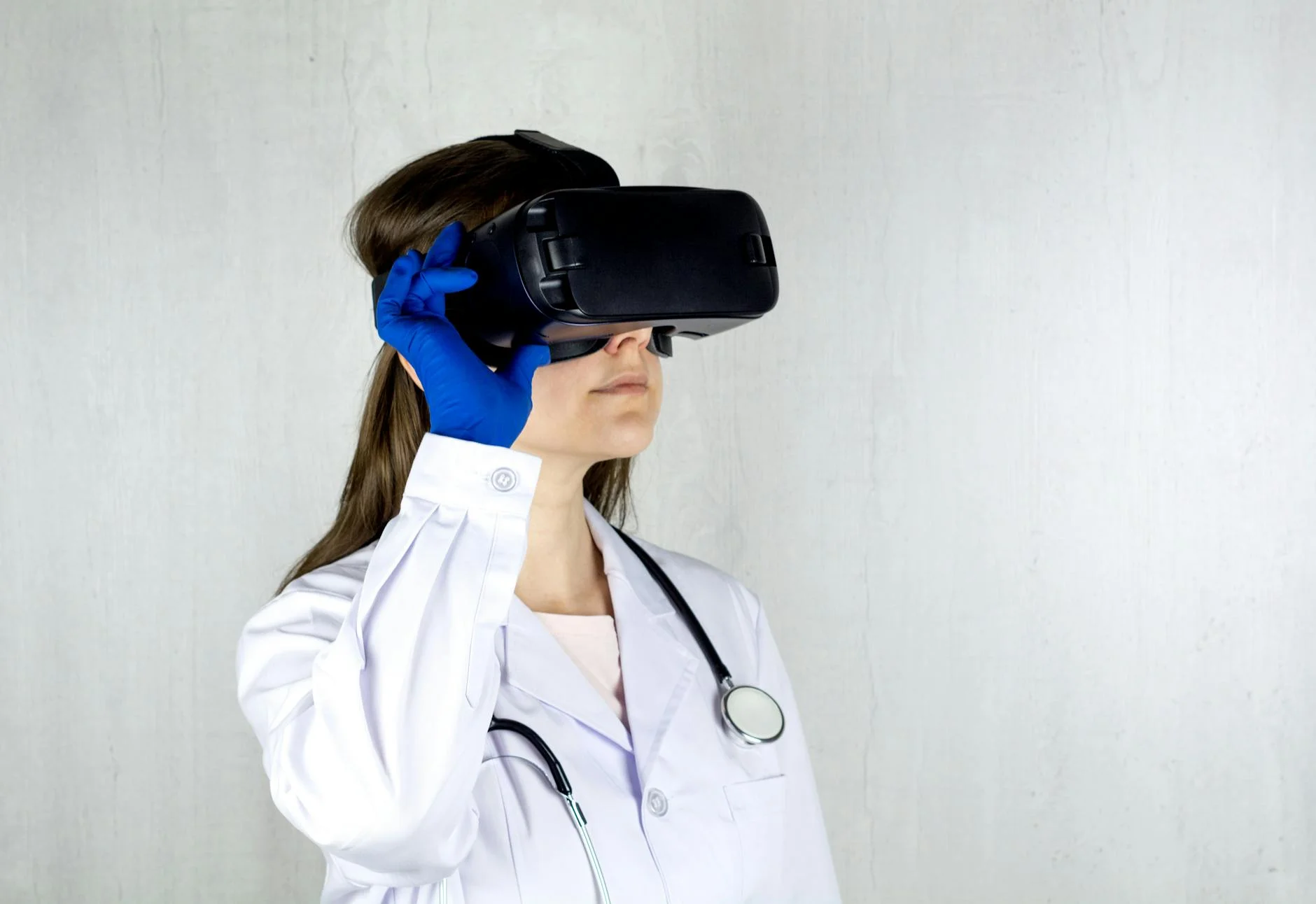
VR in Healthcare in Pakistan: How Hospitals Are Using Virtual Reality
Virtual reality is being used in Pakistani healthcare for phobia therapy, surgical skills training, pain management, and physical rehabilitation. While adoption is still in early stages, institutions like Aga Khan University Hospital, Shaukat Khanum Memorial Cancer Hospital, and several medical universities have started or piloted VR-based programmes. The technology is growing fast as headset costs fall.
Virtual reality in healthcare is no longer a futuristic concept. Hospitals and clinics worldwide have moved from pilot studies to regular clinical use. Pakistan is beginning this journey, driven by falling headset costs, growing local tech awareness, and the urgent need for scalable medical training tools. This article covers every major healthcare VR application and maps what is actually happening inside Pakistan’s health system today.
If you want to understand the basics of virtual reality technology before reading this, see our guide to what VR is and how it works.
Pakistan has approximately 1.08 doctors per 1,000 people — well below the WHO recommendation of 4.45. VR-based medical simulation and training has genuine potential to accelerate skill development for medical students and junior doctors without requiring expensive physical equipment or patient risk.
Surgical Training and Medical Education
Surgical training traditionally requires cadavers, live operating room exposure, and years of supervised practice. VR changes this by creating repeatable, risk-free surgical simulations that trainees can practice alone, at any hour, without using hospital resources.
VR Surgical Simulation for Medical Students
VR surgical simulators allow medical students to perform virtual laparoscopic, endoscopic, and orthopaedic procedures in a fully simulated environment. The system tracks hand movements, evaluates precision and speed, and provides instant feedback on errors. Students can repeat a procedure 50 times without touching a patient.
Internationally, programmes using systems like the Touch Surgery platform (now part of Medtronic) and Osso VR have shown measurable improvements in surgical accuracy. Pakistani medical universities including Aga Khan University Medical College and the University of Health Sciences Lahore have shown interest in integrating digital simulation into curricula, though full VR surgical labs remain limited.
Benefits
- Unlimited repetition without patient risk
- Objective skill scoring and progress tracking
- Available 24 hours — no OR scheduling required
- Lower cost per training session than cadaver labs
Limitations
- High upfront hardware and software cost
- Haptic feedback still imperfect vs real tissue
- Requires IT support and maintenance
Phobia Therapy and Mental Health Treatment
Exposure therapy — gradually confronting feared situations — is the gold standard treatment for phobias and PTSD. VR makes this dramatically more accessible by creating controllable virtual environments that therapists can adjust in real time.
VR Exposure Therapy for Phobias and PTSD
VR exposure therapy (VRET) has over 25 years of research behind it. A patient with fear of heights, for example, is placed in a virtual high-rise environment and gradually exposed to increasing heights under therapist supervision. The brain responds to virtual height with genuine anxiety responses, making the therapy clinically effective. Patients can be removed from the simulation immediately if distress becomes too high — something impossible in real-world exposure.
In Pakistan, clinical psychologists at private practices in Karachi and Lahore have begun using consumer VR headsets (primarily Meta Quest 2 and 3) with therapy-specific apps. The Limbix and Oxford VR platforms are used internationally. Pakistani practitioners often adapt global tools for local use given limited Urdu-language software availability.
Benefits
- Clinically proven efficacy for acrophobia, PTSD, anxiety
- Therapist controls environment in real time
- Removes need for expensive real-world exposure setups
- Patients can stop instantly — lower dropout rates
Limitations
- Limited Urdu-language therapy software
- Requires trained VR therapist — not all psychology clinics have this
- Some patients experience motion sickness
Pain Management and Physical Rehabilitation
Two of the most research-backed applications of VR in hospitals involve reducing acute pain and aiding physical rehabilitation. Both have been implemented in South Asian healthcare settings and are relevant to Pakistan’s growing hospital sector.
VR Distraction Therapy for Pain Management
The brain cannot fully focus on two intense stimuli simultaneously. VR exploits this by immersing burn patients, cancer patients undergoing painful procedures, or wound care patients in calming virtual environments — reducing the conscious experience of pain by 30 to 40 percent in multiple clinical studies. The SnowWorld application, one of the earliest VR pain tools, remains in use at burn centres worldwide.
Shaukat Khanum Memorial Cancer Hospital and Research Centre, with its focus on patient-centred care, is among the Pakistani institutions most likely to pilot VR comfort tools given its internationally trained oncology staff. Physiotherapy clinics in Lahore and Karachi have also trialled VR gamified rehabilitation for stroke and orthopaedic recovery patients.
Benefits
- Reduces need for opioid pain medication
- Calms anxious patients during procedures
- Works for adults and children
- Gamified rehab improves exercise compliance
Limitations
- Headset hygiene in clinical settings requires protocols
- Not suitable for patients with vestibular conditions
VR Healthcare in Pakistan: Current State
Pakistan’s healthcare VR adoption is early but accelerating. The country’s combination of medical skill shortages, a large population needing mental health services, and growing tech sector creates strong demand for scalable healthcare technology.
Aga Khan University Hospital (AKUH) — known for research and international standards, has engaged with digital simulation for medical training. Shaukat Khanum Memorial Cancer Hospital — patient-comfort focus aligns with VR pain management tools. CMH Lahore and Rawalpindi — military hospitals with structured training programmes suitable for VR surgical simulation. Private psychology clinics — early adopters of VR exposure therapy for phobia treatment.
The main barrier in Pakistan is not awareness — it is procurement. A single VR surgical simulation station with haptic tools can cost PKR 800,000 to PKR 3,000,000 depending on the system. Consumer-grade therapy applications on a Meta Quest headset (PKR 145,000 to 155,000 via import) are far more accessible for psychology clinics and physiotherapy centres.
Pakistan also lacks regulatory clarity on VR as a medical device. As software as a medical device (SaMD) frameworks mature globally, Pakistan’s Drug Regulatory Authority (DRAP) will need to develop guidance — currently, VR therapy tools operate in a grey zone.
The strongest opportunity for Pakistani institutions right now is medical education — using VR for anatomy teaching, clinical decision-making simulations, and procedure training. This does not require regulatory approval and directly addresses the country’s critical need to train more doctors faster. For more context on how VR is transforming education broadly, see our article on virtual reality for education in Pakistan.
VR Healthcare Use Case Comparison
| Use Case | Evidence Level | Equipment Cost | Pakistan Status | Biggest Benefit |
|---|---|---|---|---|
| Surgical Training Top Priority | Strong (Level 1-2) | High (PKR 800K+) | Early piloting | Scalable skills training |
| Phobia / PTSD Therapy | Very Strong (25+ years) | Low (PKR 150K headset) | Private clinics adopting | Accessible mental healthcare |
| Pain Management | Strong (RCT evidence) | Low (consumer headset) | Limited pilots | Reduces opioid dependence |
| Physical Rehabilitation | Moderate (growing evidence) | Low to Medium | Physiotherapy trials | Improves exercise compliance |
| Dental Anxiety Reduction | Moderate | Low (consumer headset) | Not yet adopted | Calms anxious patients |
What VR Healthcare Means for Pakistan in 2026
- Biggest near-term opportunity: Medical education and surgical simulation — addresses the doctor shortage without regulatory complexity
- Most accessible for private practices: VR phobia therapy using consumer headsets — low cost, strong evidence, immediate patient benefit
- Best ROI for hospitals: Pain management VR in burns and cancer wards — reduces medication use, improves patient satisfaction scores
- Biggest barrier: Import costs for VR equipment and lack of Urdu-language clinical software
- 5-year outlook: As headset prices fall below PKR 50,000, VR therapy tools will reach smaller clinics and even home-based therapy programmes
Understanding the difference between VR, AR, and related immersive technologies is useful context for healthcare decision-makers. Our guide on VR vs AR differences explains the technology landscape in plain terms.