VR vs AR vs Mixed Reality in Pakistan: What Is the Difference
VR (Virtual Reality) replaces your entire field of vision with a digital world — you see nothing of the real world around you. AR (Augmented Reality) adds digital elements on top of the real world — you see reality with digital overlays, like Pokemon Go or Google Maps AR directions. MR (Mixed Reality) goes further: digital objects interact with and respond to physical objects in your real space, like Apple Vision Pro where a virtual screen sits on your actual desk and responds to your physical gestures. In Pakistan, AR is the most accessible (free on any smartphone), VR requires an imported headset (PKR 130,000+), and MR devices remain prohibitively expensive.
What Is Virtual Reality (VR)
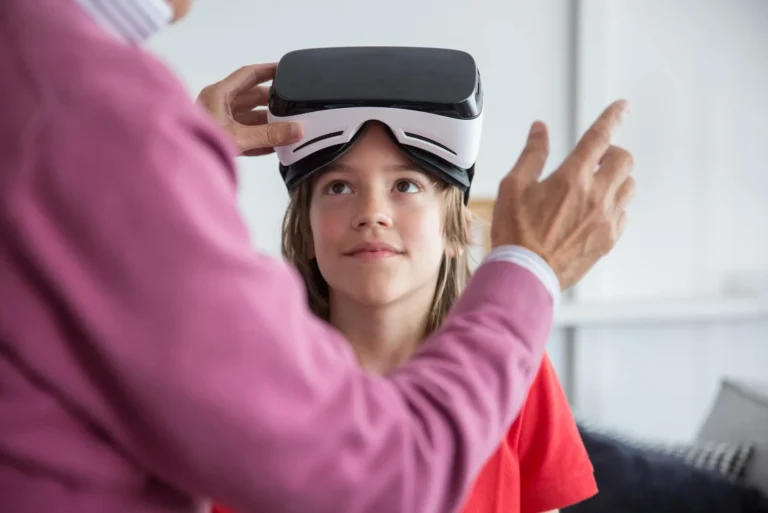
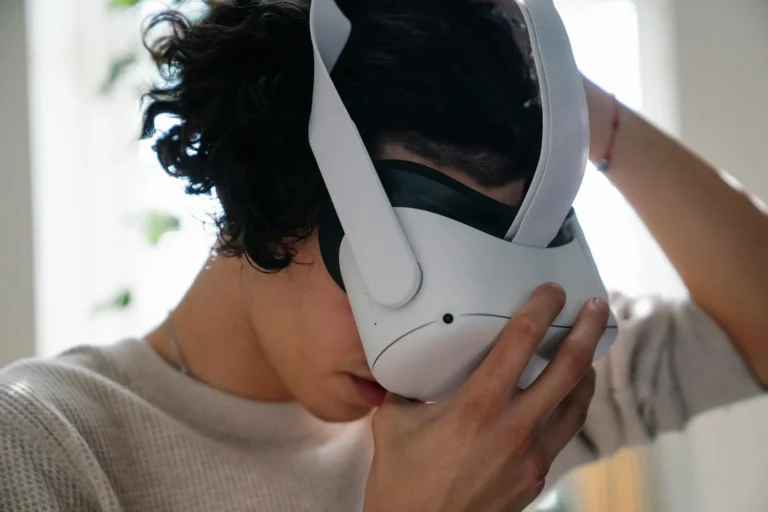
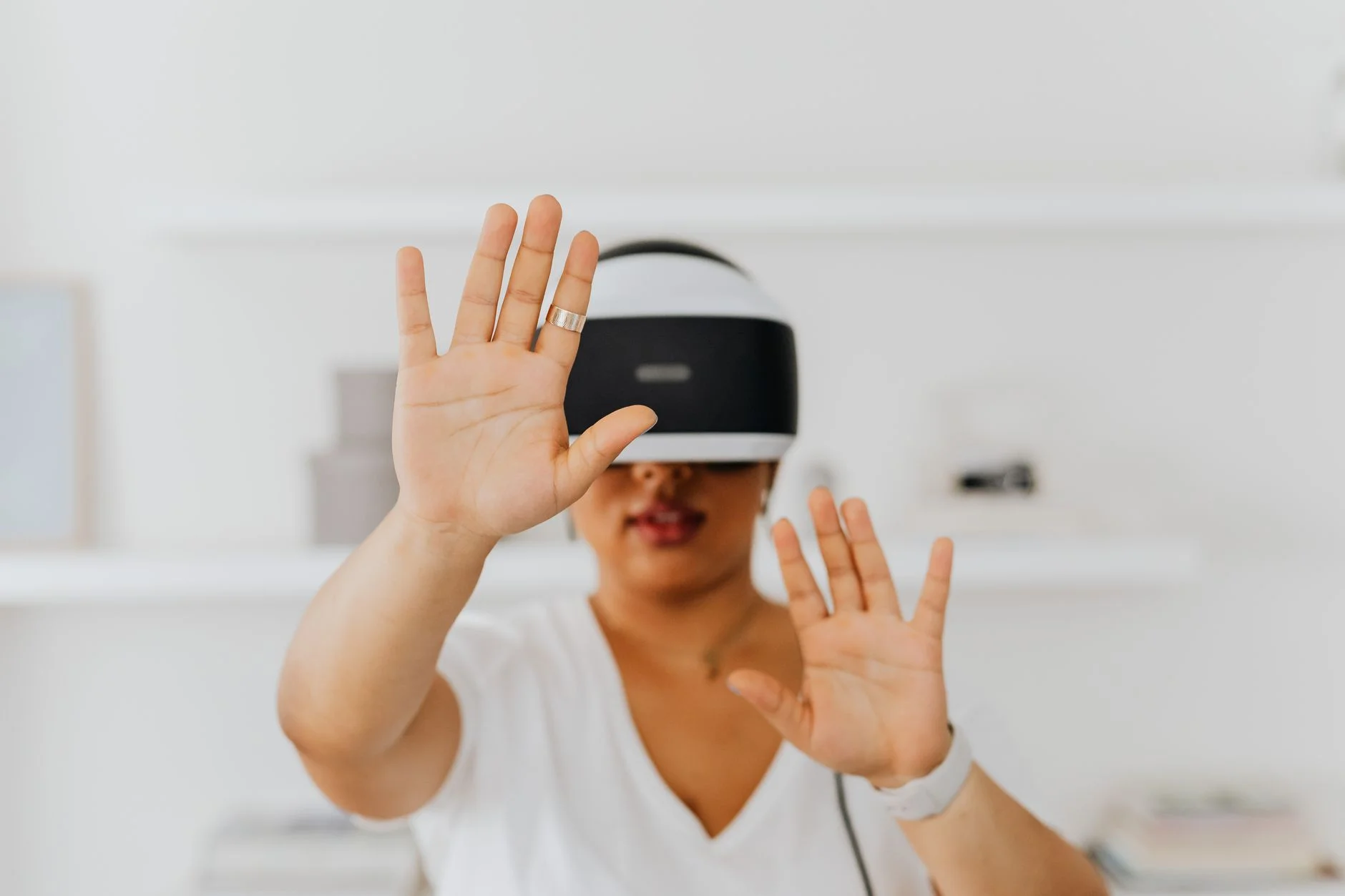
Virtual Reality is a technology that completely replaces your visual field with a computer-generated 3D environment. When you put on a VR headset like the Meta Quest 3, the screens inside display virtual worlds that fill your entire vision — you cannot see your physical surroundings at all (unless you activate passthrough mode). Head-tracking sensors detect every movement of your head and update the virtual view accordingly, creating the illusion of actually being present in another place. Hand controllers or hand tracking extend this to your hands, letting you reach out and interact with virtual objects.
The defining characteristic of VR is full immersion and visual replacement. This creates unique experiences impossible in flat media — standing on a virtual mountaintop, exploring ancient ruins at full scale, or training for a surgical procedure in a risk-free virtual operating theatre. It also creates the primary limitation: you are completely cut off from your physical environment while immersed, which means you need a clear, safe space to use it and cannot do it while walking down a street. For VR headset options available in Pakistan, see our guide to the best VR headsets in Pakistan 2026.
What Is Augmented Reality (AR)
Augmented Reality overlays digital information on top of the real world as seen through a camera or transparent display. The key word is “overlay” — the real world remains your primary view, and digital content is added on top of it. The most widely used AR experience in Pakistan right now is Pokemon Go, where you see your real street on your phone screen with Pokemon creatures appearing to stand on the actual pavement. IKEA’s Place app lets you see how a virtual sofa would look in your real living room before purchasing. Google Maps AR navigation shows a virtual arrow overlaid on your actual street through your phone camera.
AR does not require any special hardware beyond a smartphone — every modern phone from Apple or Android has the sensors and cameras needed for AR apps. ARKit (Apple) and ARCore (Google) are the development platforms, both free. This makes AR immediately accessible to virtually everyone in Pakistan with a smartphone made in the last four years. Some AR experiences use dedicated hardware like smart glasses (Ray-Ban Meta smart glasses, for example), but these are not yet widely used in Pakistan due to import costs and limited local availability.
What Is Mixed Reality (MR)
Mixed Reality takes the AR concept further: instead of simply overlaying digital content on the real world, MR creates digital objects that interact with and understand the physical environment around them. An MR headset like Apple Vision Pro or Microsoft HoloLens uses spatial mapping to understand the geometry of your room — where the walls, floors, and furniture are — and then places digital objects that obey these physical constraints. A virtual window can appear to be embedded in your actual wall. A virtual ball placed on your actual desk stays on the desk rather than floating through it. Your hands can physically interact with virtual objects in ways that feel grounded in the real space.
The distinction between AR and MR is sometimes blurry in marketing — companies often use the terms interchangeably — but the technical difference is clear: AR overlays, MR integrates. MR devices are also far more expensive and computationally complex than AR phones. Apple Vision Pro launched at $3,499 USD (approximately PKR 950,000 at current exchange rates). Microsoft HoloLens 2 is enterprise-priced even higher. These devices are not consumer products for Pakistan in 2026, though grey market units exist. For context on the broader landscape these technologies exist within, see our guide on what the metaverse means for Pakistan.
Key Differences at a Glance
| Feature | VR | AR | MR |
|---|---|---|---|
| Real world visible | No (blocked out) | Yes (overlaid) | Yes (integrated) |
| Hardware needed | Dedicated VR headset | Smartphone (minimum) | Specialised MR headset |
| Price in Pakistan | PKR 130,000–175,000+ | Free (on existing phone) | PKR 500,000–1,000,000+ |
| Immersion level | Complete (fully virtual) | Partial (overlay only) | High (blended reality) |
| Pakistan availability | Import required | Available on any smartphone | Grey market import only |
| Primary use cases | Gaming, training, social VR | Navigation, shopping, gaming | Enterprise, surgery, design |
Best Devices for Each Technology in Pakistan
Virtual Reality — Meta Quest 3
The Meta Quest 3 is the best standalone VR headset for Pakistani users in 2026. It runs games and experiences without needing a connected PC, has a large library of VR content, supports Air Link for PC VR streaming, and includes passthrough cameras that let you see your real environment when needed. Import prices vary between PKR 130,000 for the 128GB model and PKR 155,000–175,000 for the 256GB model when imported through freight forwarders from the UK, US, or Singapore. The Quest 3’s passthrough cameras also enable basic mixed reality experiences (Meta calls it “mixed reality” though it is technically video passthrough rather than optical see-through like true MR).
Pros
- Standalone — no PC required for most content
- Largest VR game library available
- Air Link for PC VR streaming
- Passthrough cameras for basic AR/MR experiences
Cons
- PKR 130,000+ import cost — significant investment
- No authorized repair centers in Pakistan
- Must be imported without local warranty
Augmented Reality — Any Modern Smartphone
The most accessible AR device in Pakistan is the smartphone already in your pocket. Any iPhone with iOS 12 or later supports ARKit, and any Android phone with a Snapdragon 660 or newer supports ARCore. Pakistani users can access AR experiences right now for free: try Google Maps AR walking directions, IKEA Place to visualise furniture, or any of dozens of free AR apps on the App Store or Play Store. For developers, building AR apps requires no special hardware — just Xcode for iOS or Android Studio for Android, both free. AR development is also one of the most in-demand freelance skills — Pakistani AR developers can find work building retail AR try-on experiences, educational AR apps, and marketing AR campaigns on Upwork and Fiverr.
Pros
- Free — uses your existing smartphone
- Immediately accessible to any Pakistani with a modern phone
- AR development skills are in demand on freelancing platforms
- No import required
Cons
- Phone screen AR is less immersive than headset AR
- Cannot be used hands-free while doing other tasks
Mixed Reality — Apple Vision Pro / HoloLens 2
True mixed reality headsets are not practical consumer products for Pakistan in 2026. Apple Vision Pro retails at $3,499 USD (approximately PKR 950,000) and requires a grey market import. Microsoft HoloLens 2 is enterprise-priced higher and designed for industrial use cases. These devices represent genuinely impressive technology — spatial computing that understands your physical environment and places digital objects within it with convincing realism. But the price barrier is simply too high for any consumer use case in Pakistan. The value proposition only makes sense for specific enterprise applications (surgical training, industrial maintenance, architecture visualization) where the ROI justifies the cost. For most Pakistani users, MR is a technology to watch for the next 3–5 years as prices decrease.
Pros
- Most immersive blended reality experience available
- Genuine productivity use cases for professionals
- Technology is real and impressive
Cons
- PKR 800,000–1,500,000+ import cost — inaccessible for most
- No local support or repair options in Pakistan
- Limited content ecosystem compared to VR
Which Technology Makes Sense in Pakistan
For immediate practical value, AR wins in Pakistan — it is free, accessible on any smartphone, and has real everyday use cases from navigation to shopping. For the best entertainment and social VR experience, Meta Quest 3 VR is the answer for those willing to invest PKR 130,000+ in an import. For job opportunities and income, both AR and VR development are viable skills — AR through ARKit/ARCore development and VR through Unity development for Quest and PC VR platforms. For importing a VR headset, see our comprehensive guide on importing a VR headset to Pakistan.
VR vs AR vs MR — Technology Comparison
| Feature | VR | AR | MR |
|---|---|---|---|
| Real-world visibility | None — fully blocked | Full — see-through | Full + digital overlay |
| Immersion level | Highest | Low | Medium–High |
| Hardware cost (PKR) | 95,000–350,000+ | 350,000+ | 400,000+ |
| Best for gaming | Yes — ideal | Limited | Growing |
| Available in Pakistan | Yes (imported) | Very limited | Very limited |
| Standalone device | Yes (Quest, Pico) | Some (RayBan) | Some (Quest 3) |
Our Recommendation
In Pakistan today: explore AR right now on your smartphone — it is free and genuinely useful. If you have the budget for a proper VR headset, import a Meta Quest 3 for the best standalone VR experience available. Skip MR devices entirely for now — the price-to-value ratio does not make sense at PKR 800,000+ for Pakistani consumers in 2026. For developers, both AR (ARKit/ARCore) and VR (Unity for Quest) are valuable skills that lead to freelancing income. AR is slightly more accessible to learn since you do not need to purchase a headset for development — just use your iPhone or Android device.